
 New research from Northwestern University has found a quick way to detect future literacy challenges in children who have not yet learned to read or write. The study, entitled Auditory Processing in Noise: A Preschool Biomarker for Literacy, found that preliterate children who were unable to successfully decipher speech in a noisy environment were more likely to have future trouble with reading and language development. “There are excellent interventions we can give to struggling readers during crucial preschool years, but the earlier the better,” said Nina Kraus, director of Northwestern’s Auditory Neuroscience Laboratory and professor of communication sciences, neurobiology, and physiology. “The challenge has been to identify which children are candidates for these interventions, and now we have discovered a way.”
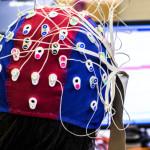
“Sound is a powerful, invisible force that is central to human communication,” Kraus elaborated. “Everyday listening experiences bootstrap language development by cluing children in on which sounds are meaningful. If a child can’t make meaning of these sounds through the background noise, he or she won’t develop the linguistic resources needed when reading instruction begins.” For the study, electroencephelography (EEG) wires were placed on children’s scalps, allowing researchers to clearly see how well the brain extracted meaning out of controlled audio stimulus and speech. The EEG assessments predicted with high accuracy how a three year old child would perform on a literacy skills test one year later. “The importance of our biological approach is that we can see how the brain makes sense of sound and its impact for literacy, in any child,” said Kraus. “It’s unprecedented to have a uniform biological metric we can apply across ages.”
#literacy #language #neuroscience